Free PDF In My Mother's House: Civil War in Sri Lanka (The Ethnography of Political Violence), by Sharika Thiranagama
Getting guides In My Mother's House: Civil War In Sri Lanka (The Ethnography Of Political Violence), By Sharika Thiranagama now is not sort of hard way. You could not only opting for book store or collection or loaning from your close friends to read them. This is a really simple means to exactly get guide by on-line. This online e-book In My Mother's House: Civil War In Sri Lanka (The Ethnography Of Political Violence), By Sharika Thiranagama can be among the choices to accompany you when having leisure. It will certainly not waste your time. Think me, guide will show you brand-new thing to read. Merely invest little time to open this online book In My Mother's House: Civil War In Sri Lanka (The Ethnography Of Political Violence), By Sharika Thiranagama as well as read them any place you are now.
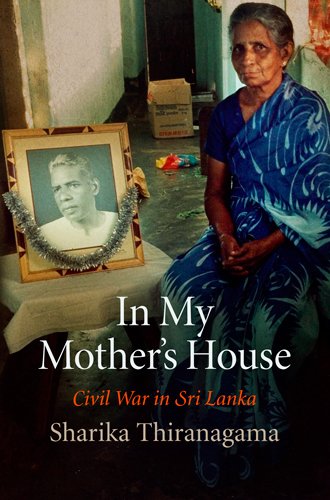
In My Mother's House: Civil War in Sri Lanka (The Ethnography of Political Violence), by Sharika Thiranagama

Free PDF In My Mother's House: Civil War in Sri Lanka (The Ethnography of Political Violence), by Sharika Thiranagama
In My Mother's House: Civil War In Sri Lanka (The Ethnography Of Political Violence), By Sharika Thiranagama. A job could obligate you to consistently improve the knowledge and experience. When you have no enough time to enhance it directly, you can obtain the encounter and expertise from reading guide. As everyone recognizes, publication In My Mother's House: Civil War In Sri Lanka (The Ethnography Of Political Violence), By Sharika Thiranagama is very popular as the window to open the globe. It suggests that reviewing publication In My Mother's House: Civil War In Sri Lanka (The Ethnography Of Political Violence), By Sharika Thiranagama will give you a new method to find every little thing that you require. As guide that we will certainly provide below, In My Mother's House: Civil War In Sri Lanka (The Ethnography Of Political Violence), By Sharika Thiranagama
If you really want really obtain guide In My Mother's House: Civil War In Sri Lanka (The Ethnography Of Political Violence), By Sharika Thiranagama to refer currently, you have to follow this web page consistently. Why? Keep in mind that you require the In My Mother's House: Civil War In Sri Lanka (The Ethnography Of Political Violence), By Sharika Thiranagama source that will offer you right requirement, don't you? By visiting this site, you have actually begun to make new deal to always be current. It is the first thing you can begin to obtain all take advantage of remaining in a site with this In My Mother's House: Civil War In Sri Lanka (The Ethnography Of Political Violence), By Sharika Thiranagama and also other compilations.
From now, locating the completed website that offers the completed publications will be lots of, but we are the trusted website to see. In My Mother's House: Civil War In Sri Lanka (The Ethnography Of Political Violence), By Sharika Thiranagama with simple link, simple download, as well as finished book collections become our good solutions to get. You can find and also use the advantages of selecting this In My Mother's House: Civil War In Sri Lanka (The Ethnography Of Political Violence), By Sharika Thiranagama as everything you do. Life is constantly developing and you require some new book In My Mother's House: Civil War In Sri Lanka (The Ethnography Of Political Violence), By Sharika Thiranagama to be recommendation consistently.
If you still need a lot more books In My Mother's House: Civil War In Sri Lanka (The Ethnography Of Political Violence), By Sharika Thiranagama as references, going to look the title and also theme in this website is readily available. You will certainly discover more whole lots books In My Mother's House: Civil War In Sri Lanka (The Ethnography Of Political Violence), By Sharika Thiranagama in different disciplines. You could likewise as soon as possible to review guide that is already downloaded and install. Open it and conserve In My Mother's House: Civil War In Sri Lanka (The Ethnography Of Political Violence), By Sharika Thiranagama in your disk or gadget. It will ease you wherever you require the book soft data to review. This In My Mother's House: Civil War In Sri Lanka (The Ethnography Of Political Violence), By Sharika Thiranagama soft data to review can be recommendation for everyone to boost the skill and capacity.
In May 2009, the Sri Lankan army overwhelmed the last stronghold of the Liberation Tigers of Tamil Eelam—better known as the Tamil Tigers—officially bringing an end to nearly three decades of civil war. Although the war has ended, the place of minorities in Sri Lanka remains uncertain, not least because the lengthy conflict drove entire populations from their homes. The figures are jarring: for example, all of the roughly 80,000 Muslims in northern Sri Lanka were expelled from the Tamil Tiger-controlled north, and nearly half of all Sri Lankan Tamils were displaced during the course of the civil war.
Sharika Thiranagama's In My Mother's House provides ethnographic insight into two important groups of internally displaced people: northern Sri Lankan Tamils and Sri Lankan Muslims. Through detailed engagement with ordinary people struggling to find a home in the world, Thiranagama explores the dynamics within and between these two minority communities, describing how these relations were reshaped by violence, displacement, and authoritarianism. In doing so, she illuminates an often overlooked intraminority relationship and new social forms created through protracted war.
In My Mother's House revolves around three major themes: ideas of home in the midst of profound displacement; transformations of familial experience; and the impact of the political violence—carried out by both the Tamil Tigers and the Sri Lankan state—on ordinary lives and public speech. Her rare focus on the effects and responses to LTTE political regulation and violence demonstrates that envisioning a peaceful future for postconflict Sri Lanka requires taking stock of the new Tamil and Muslim identities forged by the civil war. These identities cannot simply be cast away with the end of the war but must be negotiated anew.
- Sales Rank: #3522290 in Books
- Published on: 2011-09-21
- Original language: English
- Number of items: 1
- Dimensions: 9.10" h x 1.20" w x 6.10" l, 1.30 pounds
- Binding: Hardcover
- 320 pages
Review
"As an anthropologist, Thiranagama is interested in how uncontrollable eruptions of violence dislocate people's lives. . . . [In My Mother's House] leaves a profound sense of the victims' unfathomable losses."—Foreign Affairs
"The ethnographic In My Mother's House . . . places Sri Lanka's conflict in its right time-frame, bringing back into the discussion the history before 2009, and how the violence that people experienced over three decades changed lives and society forever."—The Hindu
"Through a series of deeply moving narratives, Thiranagama analyzes the multiplicity of Tamil identifications in Jaffna and brings stories of Muslims back into academic understandings of the war. Thiranagama has written a fantastic and fascinating first book."—Journal of Asian Studies
About the Author
Sharika Thiranagama teaches anthropology at Stanford University. She is coeditor of Traitors: Suspicion, Intimacy, and the Ethics of State-Building, also available from the University of Pennsylvania Press
Excerpt. © Reprinted by permission. All rights reserved.
Introduction: In My Mother's House
On 21 September 1989, my sister and I waited for our mother to come home from work to the temporary house we were renting at the time. We were living in the northern Jaffna peninsula, by then, already a war zone. We were half minority Tamil (my mother), half majority Sinhalese (my father), but brought up speaking Tamil. The years when our Sinhalese father lived in Jaffna with us, as opposed to our once or twice yearly trip to Colombo to see him, or when my Sinhalese grandmother and uncles would travel up to Jaffna to visit or to go on pilgrimage were becoming dim memories in our almost exclusively Tamil and Muslim world. For us, our world was Tamil-speaking Jaffna.
Without being quite conscious of it, we were becoming witness to immense changes. We had already become accustomed to running into bunkers when the Sri Lankan army bombed us in 1986, were used to the idea that there were places and people we should be careful of, were cognizant that there was one really big militant group called the "Tigers," and had some dim idea of other militant groups. We had seen the Indian army arrive, heard rumors of the rapes that accompanied their arrival, seen the disordering of our world as the Indians and the Tigers fought it out. I recall in art class at school, being asked to draw pictures of beaches with coconut trees, and farmers tending their fields with cows, images that no longer described our world. At home, I drew instead pictures of being in bunkers surrounded by my family with speech bubbles of the funny things that people said while helicopters hovered. My mother mounted that picture in her office at the university. I recall having an intensely happy childhood in the midst of this war.
My mother never came back home that 21 September; her journey was ended by LTTE assassins in front of the house. Her body returned like us to "our home," my ur, my grandparents' house and village where she and we had been born and had lived for most of our lives. This house is still standing in 2011, though scarred like all of us by war. My childhood ended. My sister and I left Sri Lanka for London with our father who came to get us, flying on 25 December 1989. On 26 December our new lives as refugees in London began.
This is how my journey back to Sri Lanka to conduct my research began, but it did not end there. This book is not about myself and my personal journey, but instead the stories of others, and the society to which I returned a stranger over a decade later. A society which presented in its strangeness to me, new questions about what had happened and was happening. I experienced the very real sensation that I, like many others abroad, lived in memories inadequate to the task of comprehending what had happened in Sri Lanka in the 1990s. The title of this book is of course a reference to Kwame Anthony Appiah's (1992) essay "In My Father's House," which recounts his return to Ghana for his father's funeral and the fraught family and community disputes that unfolded around the requests of the dead man. Lurking behind is the Bible, which he and I too were brought up with, and one of its most quoted statements: "in my father's house there are many rooms." This book is about returning to my mother's house, but through a glass darkly, for I have put away childish things indeed. The book, while about Sri Lanka's civil war, is more largely about war itself as "a social condition" (Lubkemann 2008).
The decades long Sri Lankan civil war was waged between the Sri Lankan state and most latterly the Tamil guerrilla group, the Liberation Tigers of Tamil Eelam (LTTE, also called the "Tamil Tigers"), who emerged supreme through the elimination of all other Tamil militant groups. While there has been punctuated ethnic conflict since Independence in 1948, most would agree that large-scale violence between "armies" in the northern and eastern minority areas became a more everyday reality in the mid-1980s. It is a war that has involved the destruction of physical and human infrastructures, the permanent displacement of hundreds of thousands of people, the pitting of majority against minority ethnic groups, and the rise of insurrectionary groups who have turned from "heroes" to oppressors.
In 2009, in the midst of writing, others and I put our lives—in my case this book—on hold. In May 2009, the Sri Lankan government announced that the civil war, which had spanned almost 30 years, had ended with the final defeat of the LTTE, arguably one of the most successful, multifaceted, and wealthy guerrilla organizations in the world. The end of the war was not a quiet one. From January to May 2009, in an ever-shrinking coastal strip in the northern Vanni region the Sri Lankan government bombarded the LTTE and more than 330,000 civilians with heavy weaponry, while denying their use. The LTTE in its turn, as the Sri Lankan army advanced through the north central areas under LTTE control, took civilians with them, leading them to their death by using them as human shields. Sri Lankan Tamils ran from the advancing army, which has never offered them an alternative to the LTTE. Moving from place to place, bunker to bunker, 280,000 to 330,000 of them ended up trapped with the LTTE. The LTTE stepped up its forced recruitment of civilians, and those who escaped tell of hiding in their bunkers, trying to protect their children from roaming LTTE cadres picking up new recruits (UTHR 2009a,b). When surrounded by the Sri Lankan army, the LTTE hid and fired among civilians, refusing to let them leave.
The Sri Lankan state continued its relentless shelling of areas it had declared safe zones for civilians as well as hospitals in the war zone.1 Escapees told the human rights group University Teachers for Human Rights-Jaffna
(UTHRJ) and news agencies such as Al Jazeera and the BBC in Tamil about the heavy shelling by the state, their desperate attempts to protect themselves in the face of constant bombardment and lack of food, water, and medicine, and their disgust with their so-called protectors, the LTTE, who were willing to sacrifice them (UTHR 2009b).2
Meanwhile, the Sri Lankan government banned journalists and independentobservers from these areas. Diasporic Tamils in Australia, Canada, and the United Kingdom mounted campaigns calling for the end of bombing by the Sri Lankan government. Increasingly, the LTTE abroad took over the management of those campaigns, and turned them into massed displays of LTTE flags and demands for the LTTE to be recognized and rescued by foreign governments. The gulf between internally displaced Sri Lankan Tamils in Sri Lanka and those in the diaspora who rallied around the LTTE was all too apparent to those of us who had done fieldwork in Sri Lanka. The support of expatriate Tamils for an increasingly delegitimized and violent LTTE meant that the protests became ineffective and the international community did not hold the Sri Lankan state to account and make it halt its use of heavy weaponry.
And so it went on. Every day in May brought more Tamil escapees from the LTTE areas carrying their elderly and children and wading through the lagoon to government-controlled territory. The events of the last days of battle and final defeat of the LTTE, especially the killing of its leader Prabhakaran, remain vague. It is unclear how the last leaders and their families died in the final days. It is rumored that they and their families were all executed by the state despite their surrender (see UTHR 2009a). The UN estimated that around 7,000 civilians may have died in these months, but this figure is in all probability conservative. After the end of the LTTE, the agony for those who survived did not end. The Sri Lankan government incarcerated 285,000 in sorely under-resourced and squalid mass camps for security clearance, not allowing them even to leave to meet family until December 2009, just before presidential elections. By mid-2010 around half had been released, but thousands still remain in camps. What happened to those taken out of camps for further questioning under suspicion of being LTTE remains a mystery. Areas where civilians once lived are now mined and scorched earth as the two armies advanced, retreated, and destroyed in their wake. The battle for hearts and minds of Tamil civilians was lost by the LTTE, and, sadly, remains the only battle the current Sri Lankan state is reluctant to initiate.
There is more to be said about these months, but I cannot say it in this book. I have no way of understanding fully what those thousands in the last war zone went through; I neither anticipated nor have privileged knowledge of the end. A book that began in the heart of the civil war somehow now tells its story from the other side of that protracted war. I have had to make the book again around a world made strange, with a new set of questions that now need to be asked.
The military war may have ended, but not the political one: the place of minorities in Sri Lanka still remains unsure. But the end of that war provides the fragile hope of new possibilities and parameters. It brings the possibility to reflect concretely on the specific social, cultural, and economic forms created in the decades of war. The accounts that will surely not survive the end of the war are those that, unlike this book, equated LTTE interests with those of the people it governed, and envisioned minority life through the pronouncements of the LTTE. The lives of Tamils and Muslims, and the complex ways people sought to live under and through the LTTE that I document here, may indeed point to why, despite many academic and Tamil nationalist claims to the contrary, when the LTTE collapsed militarily and its leader was killed it collapsed as a popular force in Sri Lanka.
Most helpful customer reviews
2 of 2 people found the following review helpful.
If you're interested in the Sri Lankan Civil War this book is an absolute must read.
By Joel Goldentyer
It's hard to capture my ambivalence about this book.
On the one hand, this is the work of a sharp, sophisticated, young anthropologist. She knows the Civil War in Sri Lanka intimately, and she has gathered material that is invaluable. You won't be able to find anything like it anywhere (on the fate of the Northern Muslims, for instance).
For those interested, her analyses are generally convincing and original ( i.e. on how events produce shifts in identity).
Her politics are primarily anti-LTTE, understandably since her mother was murdered by the Tigers. Even so, her politics are never simplistic, always allowing the reader to see the world from the perspective of individualized actors.
If, like me, you're a general reader, not confident of your grasp of the complex history of Sri Lanka, rest assured that Thiranagama provides enough background information.
What's frustrating about this book, is the unnecessary academic sludge which has been poured throughout the text, most of it very unhelpful. Have you ever spilled coffee on a book? It's sort of like that. Who really needs to be told that human relations are complex and filled with ambivalent emotions, sometimes repressed? And then, a bunch of references to authorities who have discussed the fact that things are complicated. Finally, the author begins to tell of her best friend's teenage relationship with an 'inappropriate' boy amidst fluctuating caste sentiments, but instead of developing what happened, the story is truncated with some academic reflections about displacement, etc.
To be fair, I suspect that the author sort of agrees with me, that she feels like she was forced to follow conventions she doesn't particularly care for. I picture some evil personified Anthropology (like the LTTE?) standing over her and ordering her to write in the approved fashion.
In My Mother's House: Civil War in Sri Lanka (The Ethnography of Political Violence), by Sharika Thiranagama PDF
In My Mother's House: Civil War in Sri Lanka (The Ethnography of Political Violence), by Sharika Thiranagama EPub
In My Mother's House: Civil War in Sri Lanka (The Ethnography of Political Violence), by Sharika Thiranagama Doc
In My Mother's House: Civil War in Sri Lanka (The Ethnography of Political Violence), by Sharika Thiranagama iBooks
In My Mother's House: Civil War in Sri Lanka (The Ethnography of Political Violence), by Sharika Thiranagama rtf
In My Mother's House: Civil War in Sri Lanka (The Ethnography of Political Violence), by Sharika Thiranagama Mobipocket
In My Mother's House: Civil War in Sri Lanka (The Ethnography of Political Violence), by Sharika Thiranagama Kindle

Tidak ada komentar:
Posting Komentar